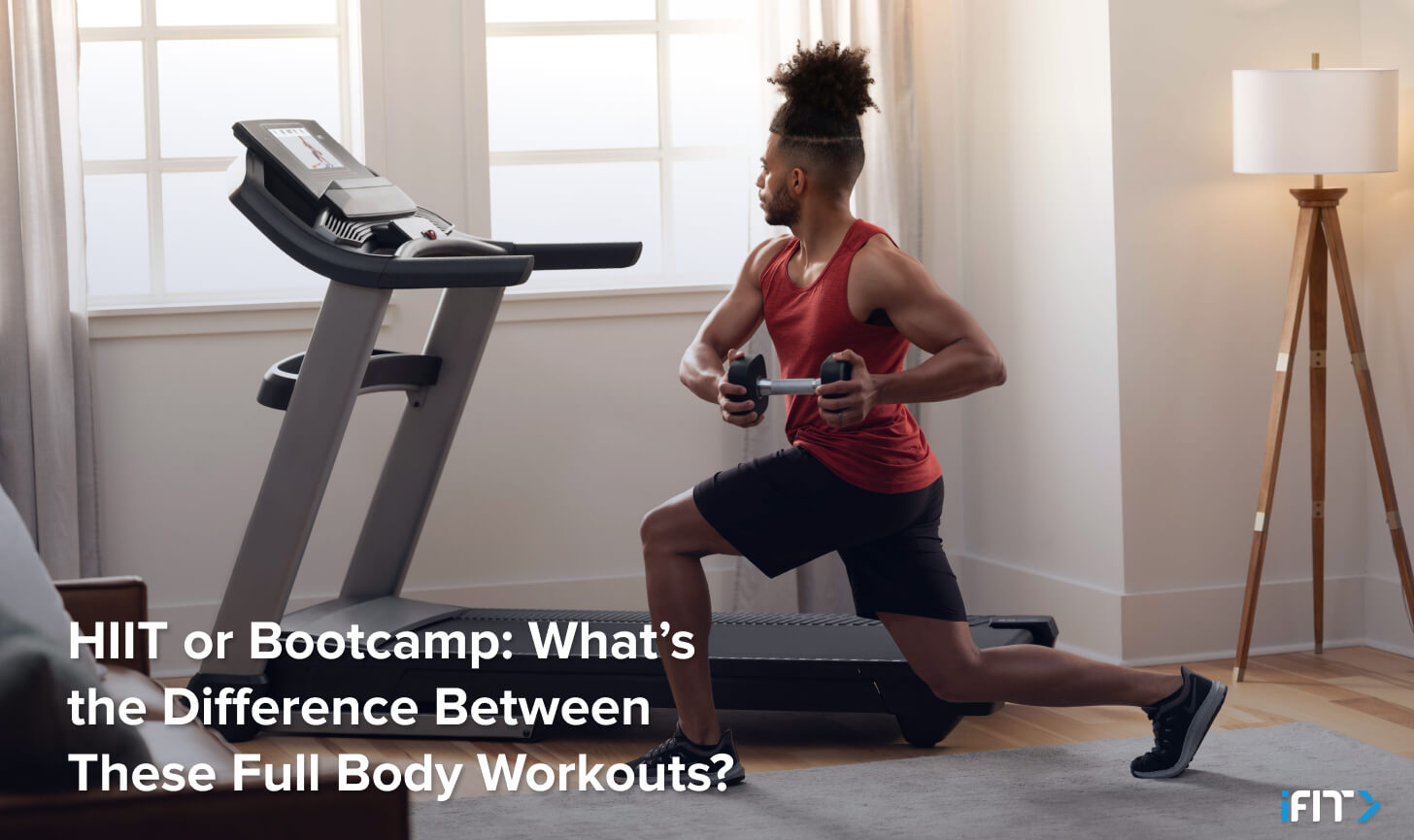
HIIT or Bootcamp: What’s the Difference Between These Full Body Workouts?
If you're not familiar with HIIT and bootcamp workouts, they're two of the most popular workout types in the fitness world today. They typically incorporate full body movements that are fast paced and use your own bodyweight, creating a serious cardio challenge for even the most seasoned athletes. Without the use of equipment, these types of workouts are quite accessible, making them a sought-after workout option for people worldwide.
Bodyweight exercises are often underrated as they may not look as impressive as a heavy barbell squat or bench press. However, full body exercises that use your own weight, like jumping lunges, mountain climbers, and burpees, are just as effective in helping you reach your goals and improve your fitness level.
While many people swear by the benefits of separating workouts by muscle group (i.e. upper body, lower body, and abs), workouts that target multiple muscle groups at once, like HIIT and bootcamp, can burn the same amount of calories, if not more.
HIIT and bootcamp workouts often target your full body, which includes all of your major muscle groups. So, you’ll exercise your legs, arms, and core at the same time. Although similar, HIIT and bootcamp are not synonymous with one another. We’re taking a look at each of these workout types, highlighting what makes them worthwhile options for your next full body workout. Once you’ve learned more about HIIT and bootcamp, you can get started on a new fitness routine with iFIT full body workouts!
What’s a HIIT workout?
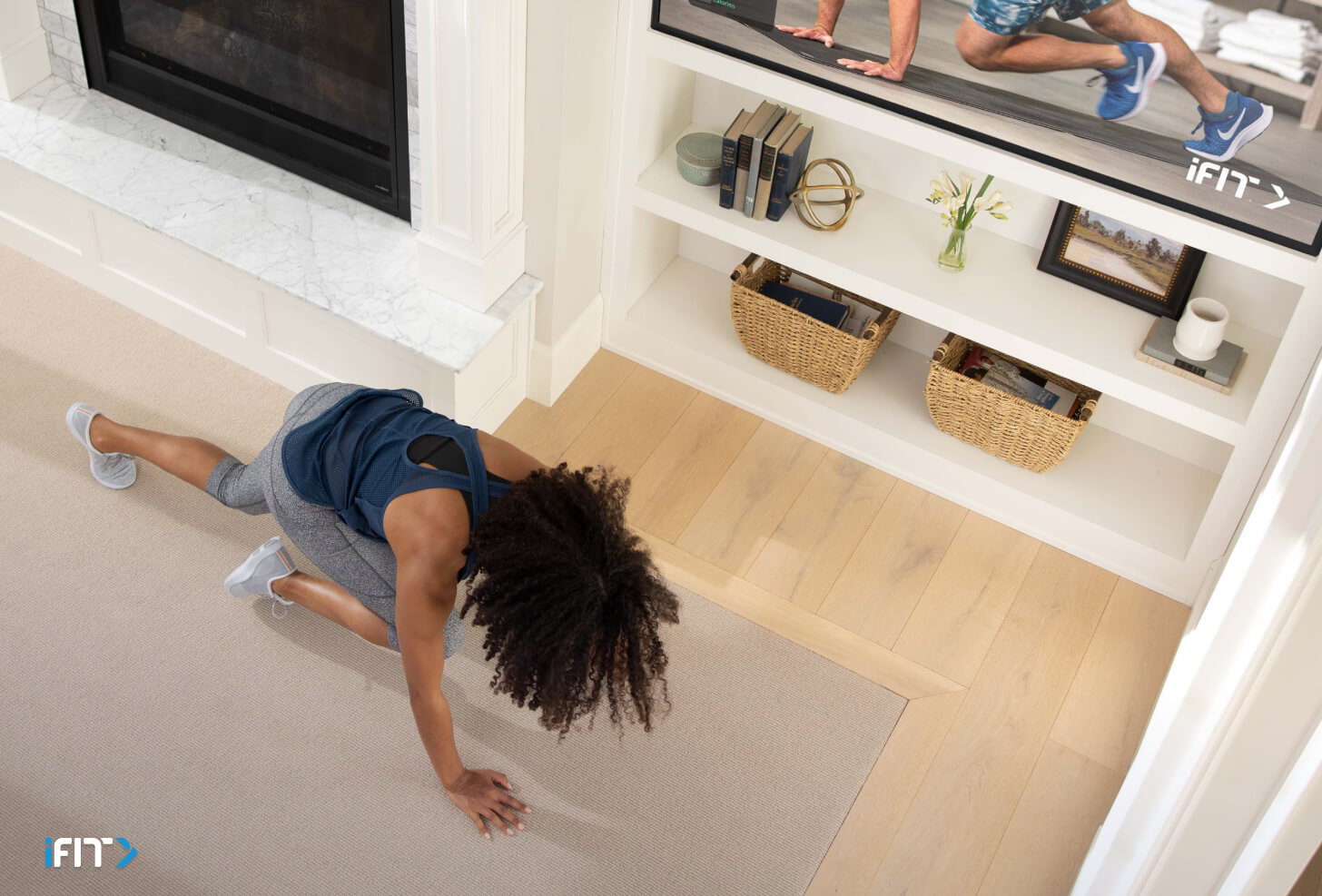
High-intensity interval training, or HIIT, is a type of workout that kicks up the tempo and makes you work hard to reach the end. A typical HIIT workout includes full body exercises like burpees, inchworms, squats, push-ups, and more. While HIIT workouts primarily involve sprints and jogging, they can also consist of cardio and strength training.
What are some distinguishing characteristics of a HIIT workout? Your target heart rate during these workouts should be higher than it is during other cardio workouts. You should be breathing hard, sweating, and feeling depleted by the end of your workout. Because of the intensity of HIIT, the workouts are designed and intended to be short, accompanied by appropriate recoveries to help you maximize performance.
When time is of the essence, HIIT full body workouts can bring the sweat-inducing exercise you want without spending over 30-35 minutes, excluding warmup and cooldown time. They can easily be done as a home workout or in a studio with a larger class. You don’t necessarily need a personal trainer to get a great HIIT workout in. Best of all, with quick HIIT workouts1, you can build your cardiorespiratory fitness right in your living room.
HIIT workouts with iFIT
You’ll find a variety of HIIT full body workout series on our fitness app, with locations ranging from the iFIT Studio to beautiful destinations all over the globe. Here are a few HIIT workout series for you to check out:
- Intro to HIIT Series with iFIT Trainer Ashley Paulson
- Bolivia Beginner Cardio HIIT Series with iFIT Trainer Hannah Eden
- Motivational HIIT Series with iFIT Trainer Dewayne Montgomery
- Red Rock HIIT Series with iFIT Trainer Jonnie Gale
- Vietnam Intermediate Cardio HIIT Series with iFIT Trainer Hannah Eden
Each of these full body workout series are structured, challenging, and should leave you feeling drained!
What’s a bootcamp workout?
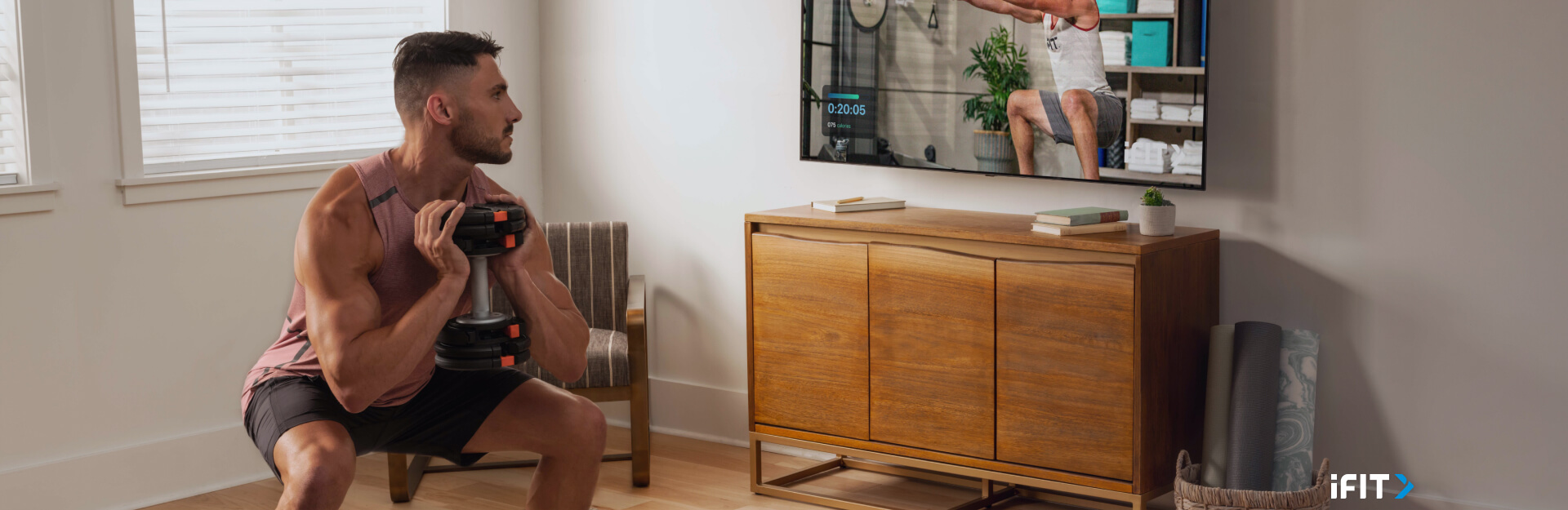
Is the military the first thing you think of when you hear “bootcamp?” If so, you’re right! Taking a few pages out of the military’s playbook, bootcamp full body workouts use calisthenic exercises like push-ups and lunges to create a high-intensity workout experience. While many bootcamp workout routines use bodyweight, others throw equipment like dumbbells or kettlebells into the mix.
Though similar to HIIT workouts, bootcamp workouts have a few distinctive characteristics. Typically, they’re led by a personal trainer or coach. During the workout, the trainer will guide you through different exercises and call out the next exercise so you know when to move and when to take a breath.
Also, bootcamp workouts are usually longer. An average class can range as long as 45-60 minutes, which may not be the best option for those new to fitness or those returning after an extended break or injury. However, the longer duration makes them slightly less intense than a HIIT workout. Since they are longer in duration than typical HIIT workouts, bootcamp workouts often have longer rest periods to accompany the lengthier workout session.
Bootcamp workouts with iFIT
If you’ve built up your stamina, iFIT bootcamp workouts may be a great challenge for you. One of our most popular bootcamp workout series—the French Polynesia Bootcamp Series—takes you to French Polynesia with iFIT Trainer Elyse Miller. Filmed in gorgeous locales, this workout series will make you work for those spectacular tropical views! Love workouts like these? There are so many more where that came from! Here are a few other bootcamp full body workouts that will put your fitness to the test:
- Bora Bora Bootcamp Series with iFIT Trainer Stacie Clark
- Level-Up Bootcamp Series with iFIT Trainer Jonnie Gale
- Next-Level Bootcamp Series with iFIT Trainer Paulo Barreto
- Test Your Limits Bootcamp Series with iFIT Trainer Gideon Akande
These full body series should help you get into bootcamp shape! With your own iFIT personal trainer, you’ll work through curated sequences of bodyweight and cardio exercises that will improve your cardiovascular health, tone muscle, and get your body moving.
How often should I do a full body workout?
As you may already know, overuse injuries can arise from training too fast or too often. Naturally, this may be a concern of yours when thinking about exercising your entire body in a single workout.
When it comes to full body classes, how many times a week should you do them? Will once a week suffice, or does that number need to increase to see results? Unfortunately, there’s not an easy, one-size-fits-all solution. You’ll find our recommendation down below, but it really depends on the person.
In a study2 comparing split-body workout routines and total-body workout routines, the participants were separated into two groups—split-body and total-body. The split-body participants trained muscle groups one day a week versus the total-body group, which trained three days a week. At the end of the study, the total-body group showed greater muscle thickness, which may suggest benefits to higher frequency resistance training during the week. For this study, the full body workouts were the better option for muscle gain.
So, how often should you do a full body workout? We’d recommend between 2-4 workouts per week, but ultimately, the best course of action is to listen to your body. If you’re feeling worn down, take a rest day and come back the following day (or the next) when you feel more refreshed. Also, it’s not a bad idea to break up your full body routine with isolated workouts, alternating between targeting your full body versus zoning in on specific muscle groups.
Can I build strength and muscle with full body workouts?
While they’re effective for cardiovascular health, full body workouts can also help you work on strength and build muscle. Another study examined the effect strength training frequency3 has on lean mass and strength. The high-frequency training group (HFT) trained each muscle group three days a week, whereas the low-frequency training (LFT) group trained just once a week.
Over the course of eight weeks, the HFT and LFT group’s training routines focused on the pectoralis muscles, upper back, quadriceps, gastrocnemius, deltoids, biceps, triceps, and hamstrings. At the end of the strength training trial, researchers found no significant differences between the high-frequency and low-frequency groups. Each group had improvements in lean mass and strength! The LFT group shows us that full body training even just once a week can result in muscle and strength improvements.
While it’s great to push yourself, it’s also important to know when to stop and reset. When coupling HIIT or bootcamp workouts with iFIT walking, running, or hiking workouts, you’ll need those two days of rest or longer, depending on how long you need to recuperate.
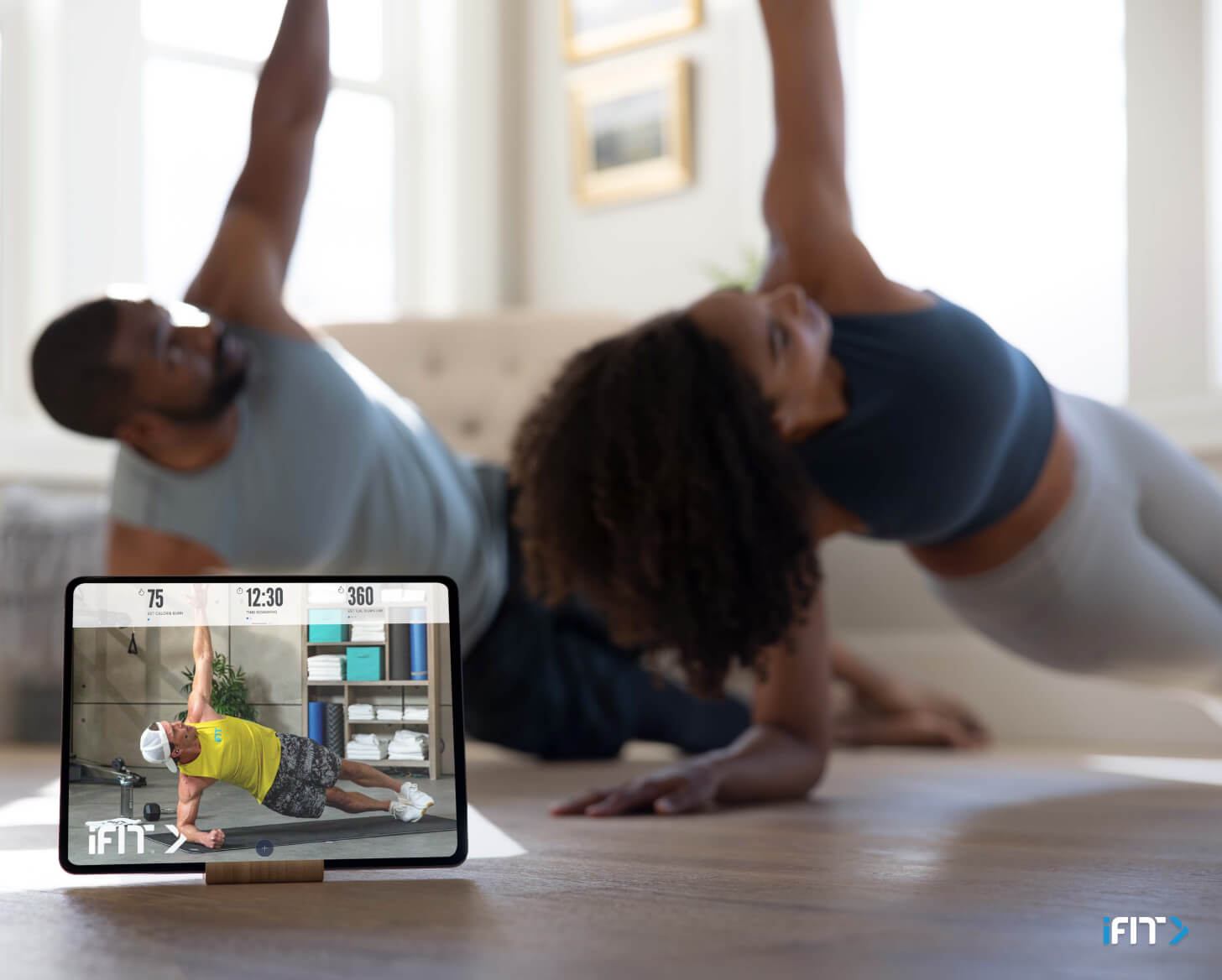
Try an iFIT full body workout
If you’re ready to join a HIIT or bootcamp full body workout series, iFIT offers a great selection of each workout type. When you download our fitness app and sign up for iFIT, you’ll gain access to an incredible selection of full body workouts. Each of these workouts is led by an iFIT Trainer who will educate you and continue to motivate you with every workout. Simply choose a workout that suits your style and level to start your fitness journey.
iFIT offers a host of workout series that will keep you engaged and excited. The best full body workouts are those that make you feel empowered at the end, no matter the duration or difficulty. From short 20-minute workouts to longer ones, the iFIT app is a full body app that offers a variety of workout series. Whether you’re a beginner or more experienced, our personal trainers will be there for you to follow during your workouts, helping you on your journey to becoming a better version of yourself!
References
1. Sabag, A., Little, J. P., & Johnson, N. A. (2021, March 24). Low‐volume high-intensity interval training for cardiometabolic health. The Physiological Society. https://physoc.onlinelibrary.wiley.com/doi/10.1113/JP281210.
2. Schoenfeld, B. J., Ratamess, N. A., Peterson, M. D., Contreras, B., & Tiryaki-Sonmez, G. (2015). Influence of resistance training frequency on muscular adaptations in well-trained men. Journal of Strength and Conditioning Research, 29(7), 1821–1829. https://doi.org/10.1519/JSC.0000000000000970.
3. Thomas, M. H., & Burns, S. P. (2016). Increasing lean mass and strength: a comparison of high frequency strength training to lower frequency strength training. International Journal of Exercise Science, 9(2), 159–167. https://www.ncbi.nlm.nih.gov/pmc/articles/PMC4836564/.
Disclaimer: This blog post is not intended to replace the advice of a medical professional. The above information should not be used to diagnose, treat, or prevent any disease or medical condition. Please consult your doctor before making any changes to your diet, sleep methods, daily activity, or fitness routine. iFIT assumes no responsibility for any personal injury or damage sustained by any recommendations, opinions, or advice given in this article. Always follow the safety precautions included in the owner’s manual of your fitness equipment.
You might also like

How to Stay on Track with Your Workouts
Congratulations! If you find yourself reading this, then you have successfully completed the first step toward a healthier and more dynamic you. As you embark on a new journey to a healthier lifestyle, it's important to realize that you not only need to, but want to make a change. Keep in mind that staying on track with your workouts is as much a physical challenge as it is a mental challenge. Now, ask yourself, are you committed? Remember, mind over matter—your goals are never out of reach. Check out these tips from our iFit trainers to help you stay on track with your workout routine. Gideon Akande The time of year for reflection and rededication is upon us, and personal fitness is at the forefront in the minds of most. Whether this is your first rodeo or you’re an experienced athlete, here are my 5 top tips to improve your exercise excellence. Start somewhere. It doesn’t matter what you do, just MOVE! You can fine-tune the process at a later time, so start with the most convenient forms of exercise for you. Take it easy. Rome wasn’t built in a day; neither was your body. There is no need to feel like you must complete your goals in the first week. Build slowly and gradually to remain safe and feel accomplished. Switch gears. Fitness is a very personal journey. It is not necessary to only follow one discipline to see results. Therefore, try it all! You’ll be surprised at what your body best responds to, but, more importantly, what you may enjoy. Posse up. Studies show that success rates improve dramatically when you surround yourself with others that share similar goals. Join forces with family, friends, and coworkers to develop accountability that will push you further, longer. Rest for your best. Recovery is essential for you to feel and perform better. Stretch, massage, and sleep are great ways to increase energy, boost metabolism, and fuel your next sweat session. You can train with Gideon on any iFit-enabled equipment all around the world and in the studio! Follow Gideon on Instagram @getfitwithfgiddy Follow iFit on Instagram @ifit Breeanna Cox Here are my tried-and-true tips for staying on track! Set realistic goals. Break up your activity into small tasks each and every day, so it's not so intimidating. Try incorporating 30 squats 3 times a day into your routine, and then build up from there. Hold yourself accountable. Tell friends, family, or your spouse what your goals are, so you've officially put your goal out to the world. This will help ensure that you follow through with your fitness plans. Love your workouts. Don't follow fitness fads or trends—do what you find enjoyable, so that you look forward to your workouts instead of dread them. Have a clear purpose. Identify what it is that's driving you to stick to your goal. Why do you want to be more fit? Once you figure out your motivation, write it down and post it everywhere you can see it! You can train with Breeanna on any iFit-enabled treadmill and elliptical! Follow Breanna on Instagram @bodybybree2 Follow iFit on Instagram @ifit Elyse Miller We all get a little off track from time to time. The best way to stay on track is to make fitness a top priority. Schedule your workouts. Plan your workouts as if it’s an appointment with someone else. You wouldn’t want to cancel out on a hair or doctor appointment, so don’t ditch out on yourself. Set a time and follow through. Prep your gear. I lay my workout clothes out at night, so I see them waiting for me first thing in the morning. Having that reminder staring at you in the face as soon as you wake up makes it harder to skip out on your workout. Early bird gets the worm. I’ve found that early workouts are great for those with busy schedules. Rather than putting it at the end of the day, when a million other things can get in the way, I recommend waking up 30–60 minutes early to get your sweat on. Keep it at home. Having workout equipment at home is a major game changer, too! Taking out the commute and hassle of a gym saves so much time and eliminates excuses. Make it a lifestyle. Exercising your body should be as routine as brushing your teeth. Make it a non-negotiable. Even on your “off days,” it’s good to schedule in some body work time—stretching, foam rolling, or planning for the next workout. You can train with Elyse in Bora Bora and in studio classes on any iFit-enabled treadmill! Follow Elyse on Instagram @fitelyse Follow iFit on Instagram @ifit John Peel Sign up for a program. If you are just beginning your fitness journey or looking for a routine to get you back in the game, the iFit Alps Incline Series is the perfect program! This 6-week plan will ease you into a structured workout regimen and also give you the push and climb you need to hit some challenging progressions. Not only will you sweat, but you will experience the most beautiful location I think we've filmed at to date. The Alps are breathtaking. They are even more breathtaking when you witness them from the summit, after crushing a workout! Hydrate, hydrate, hydrate. Dehydration can lead to a lack of energy and increased heart rate—both will make your workouts much more challenging. I like to drink two cups of water as soon as I wake up. It's an easy change to make to your morning routine, but it makes a big impact. #100aDay. Since having back surgery, I've set a personal goal of doing 100 ab rollouts each day. A strong core means more stability, improved performance, better posture, and also leaves you less susceptible to fitness-related injuries. Set a goal that doesn't take too much time out of your day. That way, you'll have no excuses not complete it! You can train with John on any iFit-enabled equipment, all around the world and in the studio! Follow John on Instagram @johnpeelefitness Follow iFit on Instagram @ifit The first step to fitness success is believing you can do it. Staying on track is the hard part, but with small changes in your mindset and daily routines, you can make a lasting impact in the long run. You only have one body, so make sure you nurture it and give it the attention it deserves! Here's to a happier, healthier, and more dynamic you. You deserve it.
January 9, 2019

NEW ROUTES : EVEREST
Add another check to your bucket list without spending a dime. Khumbu Region Google just released the first-ever Street View images for Mount Everest, located in the Mahalangur section of the Himalayas on the border of Tibet. And while you may not be able to climb to the summit of this amazing peak, you can explore the Khumbu region of Nepal in the mountain’s shadow and Mount Everest's base camp. The Program Our Mount Everest workout program will push you past your limits. If you’re ready to take on a new challenge, then get ready to hike over 71 miles and climb more than 19,000 vertical feet in just 20 workouts. This grueling program is not for the faint of heart, because you will be required to ask more from yourself. But let me tell you, the views are absolutely worth the work. And just remember, when the going gets tough, at least you aren’t carrying a pack on your back. To join us, add the program on iFit, jump on your iFit-enabled equipment and enjoy the workout as your machine will show Google Street View ™ all along the way, while automatically adjusting the incline/decline to match the outdoor terrain. Yak Parking Lot in Namche Bazaar, Nepal Descent from South Base Camp Everest South Base Camp Everest Base Camp - Climber's Memorial Your Journey Through the misty air and lush terrain, you’ll start your journey at the Tenzing-Hillary Airport, located in Lukia, Nepal. And with the program being all trail, you’ll wander through small towns, seeing a way of life completely different from your own. As you follow other fellow backpackers, don’t be surprised to pass some pack mules along the way that you’ll wish were carrying you. Continuing on your journey, you’ll trek through multiple cities as you head towards the mountain. From Phakding to Benkar, Khumjung to Panboche, and all the way to Thame, you’ll wind past monasteries, lodges, and schools, gaining an appreciation for the lifestyle in this beautiful region. You’ll see more than just the drizzling weather you begin in, as sunshine and desert-like landscapes cover much of the landscape with snow-capped mountains in view. Your expedition ends in Gorak Shep, a frozen lake bed covered with sand in Nepal. Now all that’s left to do is join the program, stretch your legs, and get ready for inclines and views that will take your breath away! iFit Trainer Emily Wiley Suggested Workout MOUNT EVEREST Climb over 19 thousand feet to Everest Base Camp. WARNING: This post is not intended to replace the advice of a medical professional. The above information should not be used to diagnose, treat, or prevent any disease or medical condition. Please consult your doctor before making any changes to your diet, sleep methods, daily activity, or fitness routine. iFit assumes no responsibility for any personal injury or damage sustained by any recommendations, opinions, or advice given in this article.
April 2, 2015
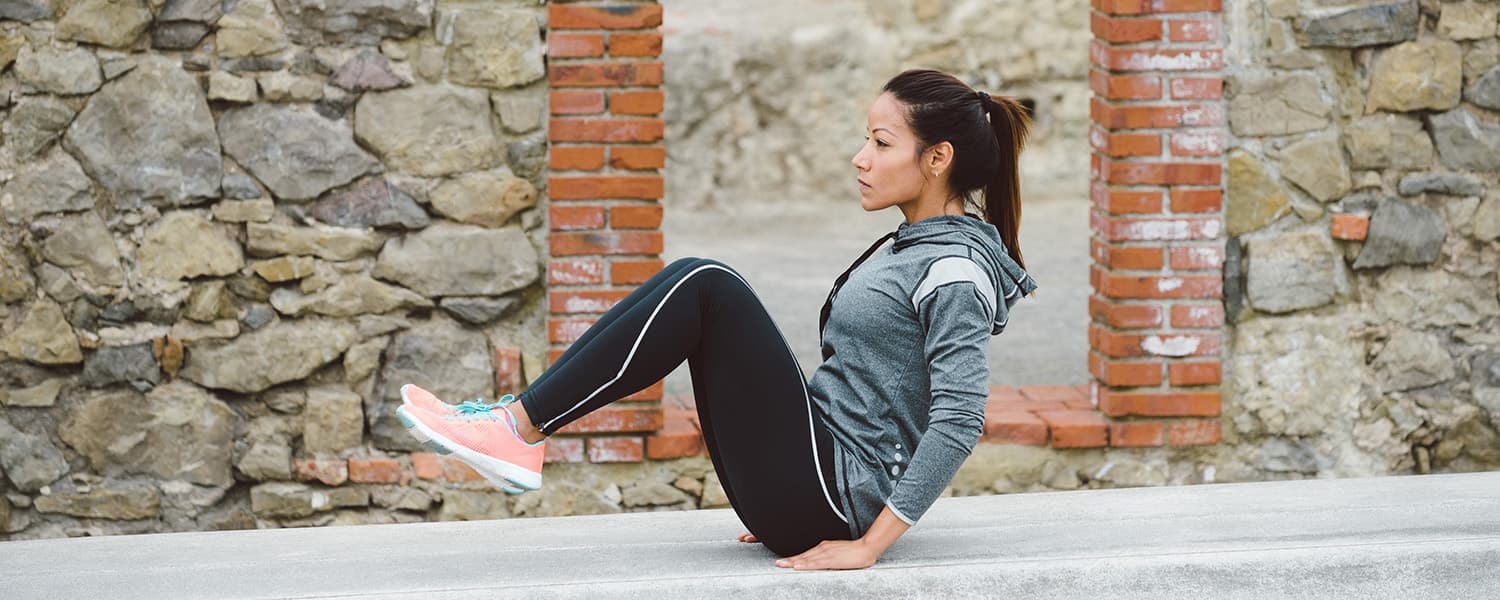
5 Ab Moves You Haven't Tried Yet
Move: Stir the Pot Equipment: Suspension cables (shown: Rip60) How to: Lengthen the cables to hit just below your knee. Sit, facing towards them. Place your right foot in the left strap and left foot in the right strap (feet should be crossed), then twist around, pushing up into plank position (this will uncross the straps). Draw a large circle with your feet. Alternate directions at the bottom of each circle. Pro tip: Keep your shoulders right above your wrists, and be careful not to let your hips drop towards the floor. Your back should be straight. Move: Plate Pass-throughs Equipment: Plate (shown: 10lbs) How to: Lie flat on your back. Hold the plate behind your head with arms outstretched. Lift both feet about six inches off the floor. Tuck in your arms and knees, place the plate on your shins, then extend both your arms and legs back out. Pro tip:Keep your lower back flat on the floor without arching it. During the crunch portion, pull your knees in tightly to your chest, and focus on using your abs. Move: Low Plank Variation: Knee Taps Equipment: None How to: Begin in a forearm plank. Alternate tapping one knee to the floor at a time to target your lower abs. Pro tip: Focus on tucking your hips under and think about the muscle group being worked as you complete the movement. You can also combine this with other plank variations for a challenging core workout. Move: Leg Lift Reverse Crunch Equipment: None How to: Begin on your back, hands behind your head and feet about six inches off the floor. Raise your legs to point towards the ceiling, then crunch your knees to your chest. Straighten them back out, then slowly lower your back to the starting position for one rep. Pro tip: Be careful not to let your back arch. You can place your hands at your sides to make the movement a little easier. Move: Breakdancer Equipment: None How to: Starting in high plank, thread your right leg to the left side of your body, lowering until your thigh comes in contact with the floor (or as far as flexibility allows). Repeat on the opposite side with a jump in between. This movement should be performed as quickly as possible without losing form. Pro tip: If you’re just starting out, you can return to plank position between each side. As you become more advanced, skip this step, and propel yourself from side to side. This movement doubles as a great cardio workout! Move: Gymnast Tuck Equipment: Plyo box How to: Begin sitting on a box. Place your hands close to your sides on the edge, with your fingers facing forward. Press up and pull your hips back and away from your seat, keeping your legs straight. Hold this position as long as possible before lowering back down. Pro tip: This is a static move, so practice holding it for longer each time you do it. Focus on sucking your belly button in and pulling your hips backward to create the most space between you and the box. iFit Trainer Emily Wiley WARNING: This post is not intended to replace the advice of a medical professional. The above information should not be used to diagnose, treat, or prevent any disease or medical condition. Please consult your doctor before making any changes to your diet, sleep methods, daily activity, or fitness routine. iFit assumes no responsibility for any personal injury or damage sustained by any recommendations, opinions, or advice given in this article.
February 8, 2016